



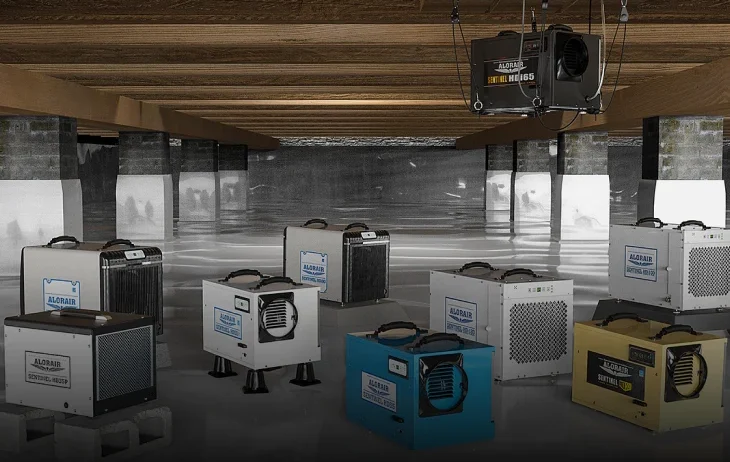
Moisture that accumulates beneath a home rarely announces itself with obvious signs. By the time a homeowner notices sagging floors, musty odors or peeling paint, the crawlspace has often been damp for months or years. A dedicated crawlspace dehumidifier intercepts that moisture before it travels upward into living spaces, protecting both the structure and the air quality inside. AlorairCrawlspace specializes in exactly this category of equipment, offering dehumidifiers and ventilation solutions engineered specifically for below-grade environments.
Why Crawlspace Moisture Is a Structural Concern
The crawlspace sits at the intersection of soil, outdoor air and the home’s structural framing. Soil naturally releases water vapor and that vapor condenses on cooler surfaces, wood joists, insulation, ductwork and concrete footings. Over time, sustained condensation creates conditions where wood begins to soften, metal corrodes and mold colonies establish themselves across wide surface areas. Unlike a basement, a crawlspace is rarely entered or inspected, which allows moisture-related deterioration to advance undetected for extended periods. Addressing the humidity at its source with a high-capacity dehumidifier is the most effective intervention available to homeowners.
What Makes a Crawlspace Dehumidifier Different From a Standard Unit
Consumer-grade dehumidifiers sold for bedrooms or basements are not designed to operate in the conditions found in a crawlspace. These spaces are typically low-clearance, often uninsulated and subject to wide temperature swings across seasons. Standard units lack the drainage configuration, the low-temperature performance and the energy efficiency ratings required for continuous unattended operation. Crawlspace-specific dehumidifiers are built with auto-drain connections, sealed housings that resist dust and debris and refrigerant systems that maintain extraction capacity even when temperatures drop. AlorairCrawlspace designs its units with these constraints in mind, producing equipment that operates reliably in spaces where consumer models would underperform or fail entirely.
Key Features to Look For
When selecting a dehumidifier for a crawlspace, several specifications determine whether the unit will handle the moisture load without constant intervention. The following factors should guide any purchasing decision
- Extraction capacity, measured in pints per day at defined temperature and humidity conditions; higher crawlspace humidity levels require higher capacity ratings.
- Operating temperature range, the unit should maintain extraction performance at temperatures as low as those found in unheated crawlspaces during colder months.
- Integrated drainage, a gravity drain or condensate pump connection eliminates the need to manually empty a collection tank.
- Energy efficiency rating, continuous-duty equipment runs around the clock, making efficiency certifications directly relevant to operating costs.
- Humidistat control, an adjustable built-in humidistat allows the unit to cycle based on ambient relative humidity rather than running at full output continuously.
- Filter accessibility, crawlspace environments are dusty; the filter should be reachable for periodic cleaning without requiring specialized tools.
Encapsulation and Dehumidification Working Together
Many moisture control professionals recommend pairing a dehumidifier with full crawlspace encapsulation. Encapsulation involves lining the floor and walls with a heavy-duty vapor barrier, then sealing all vents and penetrations. This approach dramatically reduces the volume of moist soil vapor entering the space. However, encapsulation alone is not sufficient, even a sealed crawlspace accumulates humidity from air infiltration and residual soil moisture, particularly in the first season after installation. A dehumidifier running continuously within an encapsulated space brings relative humidity down to the target range (typically between 50 and 60 percent) and holds it there regardless of outdoor conditions. The combination of a sealed barrier and an active dehumidifier represents the standard of care for high-moisture crawlspace environments. Homeowners can explore compatible systems at AlorairCrawlspace to find units sized appropriately for their square footage and moisture load.
Installation Considerations for Homeowners
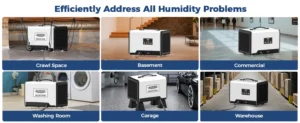
Installing a crawlspace dehumidifier involves several practical decisions. Placement should allow for adequate airflow around the unit and clear access to the drain connection and filter. Most units can be positioned on the crawlspace floor or suspended from joists using mounting hardware, depending on clearance and preferred airflow direction. The drain line should run to a sump pit, floor drain or exterior exit point with sufficient fall to prevent backflow. Where gravity drainage is not feasible, a small condensate pump handles the transfer automatically. Electrical supply needs to be a dedicated circuit rated for the unit’s amperage draw, a licensed electrician should verify this before installation. For homeowners who prefer a professionally managed setup, authorized dealers and installers can source equipment and handle the entire process, with units available directly through AlorairCrawlspace.
Maintenance Practices That Extend Equipment Life
A crawlspace dehumidifier in continuous operation accumulates airborne particulates on its filter more quickly than a unit used seasonally. Cleaning or replacing the filter on a regular schedule, typically every one to three months depending on dust levels, keeps airflow unrestricted and extraction efficiency high. The coils should be inspected periodically for frost buildup, which can indicate that the operating temperature has dropped below the unit’s rated range or that airflow is obstructed. Drain lines should be flushed to clear algae or mineral deposits that restrict flow. Keeping a maintenance log with dates and observations helps identify patterns that may signal a need for service before a minor issue becomes a failure. Equipment maintained according to manufacturer guidelines consistently delivers longer service life and more consistent moisture control across seasonal changes.
Protecting a home’s structural integrity and indoor air quality starts below the floor. A properly specified and maintained crawlspace dehumidifier removes the conditions that allow mold, rot and pests to take hold, returning that investment many times over in avoided repairs. Visit AlorairCrawlspace to browse the full range of crawlspace moisture control solutions available for residential and light commercial applications.